Ice Cross Track Design: Pushing the Limits of Speed and Skill
Ice Cross tracks are engineered to push the limits of speed, agility, and technical skill, making them one of the most distinctive features of the sport. Unlike traditional ice racing surfaces, these courses are far from flat. Carefully constructed with steep downhill sections, sharp corners, jumps, and rollers, Ice Cross tracks create a fast, aggressive, and constantly changing racing environment. Each element is designed not only to challenge athletes but also to showcase the intensity and unpredictability that define Ice Cross competition.
The Track Design Process
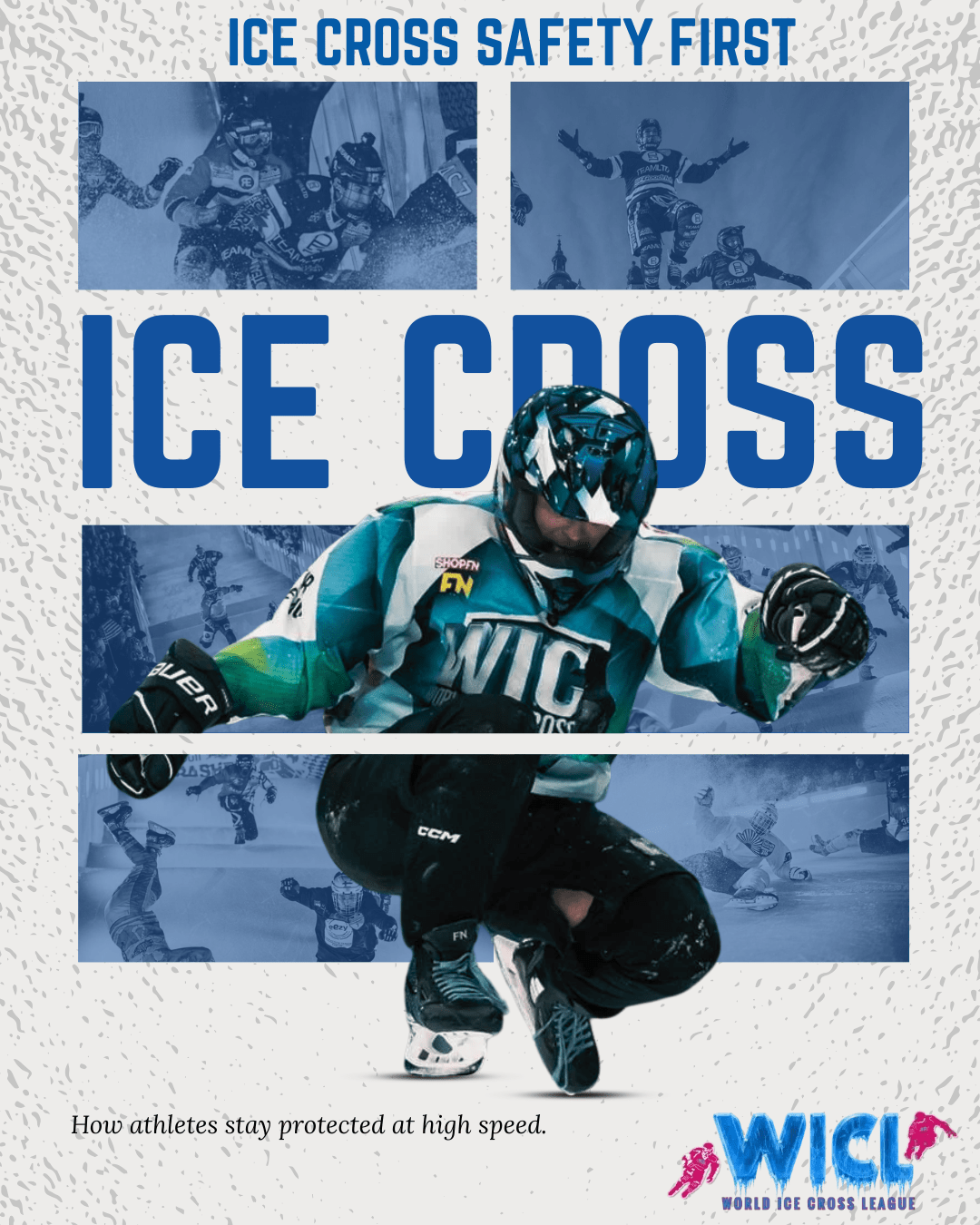
Behind every Ice Cross track is a detailed design process that balances performance with safety. Track designers collaborate with engineers, event organizers, and safety officials to create layouts that challenge athletes without introducing unnecessary risk. Ice quality, course width, obstacle placement, and barrier positioning are all meticulously planned. High-impact zones are reinforced with padding, and transitions between features are smoothed to maintain flow and reduce the likelihood of dangerous falls.
Maintaining Flow and Rhythm
Flow is a critical component of track design. A well-built course allows athletes to maintain rhythm as they move from one obstacle to the next. Jumps lead naturally into corners, and rollers are strategically placed to either build or disrupt momentum, depending on the intended challenge. This rhythm not only affects race outcomes but also separates elite athletes from the rest, as the best competitors can read the track and adapt their technique in real time.
Enhancing the Spectator Experience
Spectator experience is another major consideration in Ice Cross track design. Events are known for their high-energy atmosphere, and course layouts are often structured to maximize visibility for fans both on-site and during broadcasts. Key features, such as jumps and tight corners, are positioned in areas where spectators can clearly see the action. Lighting, camera angles, and course elevation are also factored into the design to enhance the viewing experience and keep fans engaged.
Unique and Unpredictable Courses
One defining characteristic of Ice Cross is that no two tracks are ever the same. Each course is shaped by its environment, whether in urban settings, ski resorts, or temporary event structures. This variation forces athletes to constantly adapt, as familiarity alone is not enough. Competitors must quickly analyze each track, memorize its features, and adjust strategies accordingly. This unpredictability adds an extra layer of challenge, keeping the sport fresh for both athletes and spectators.
The Purpose of Well-Designed Tracks
Ultimately, Ice Cross tracks serve multiple purposes. They challenge athletes physically and mentally, test technical skills under pressure, and deliver a thrilling spectacle for audiences worldwide. As the sport continues to expand, track design evolves alongside it, incorporating innovations in construction, safety, and creativity to ensure every race remains exciting, competitive, and safe.