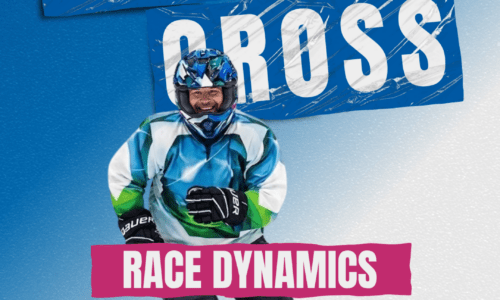
Ice Cross Race Format Explained
Ice Cross races are designed to be fast, intense, and highly competitive. Unlike many ice sports that rely on time trials or individual performance, Ice Cross features direct head-to-head racing. Four athletes compete at the same time on a downhill track, battling for position as they navigate jumps, rollers, and sharp corners.
Each event typically begins with a qualifying round. During qualifying, athletes race individually against the clock to determine their ranking. These times decide how athletes are placed into the elimination heats.
Once qualifying is complete, the competition moves into head-to-head racing. Athletes compete in heats of four racers. The top two finishers in each heat advance to the next round, while the remaining competitors are eliminated.
This elimination format continues through multiple rounds. As the field narrows, the competition becomes increasingly intense. Athletes must combine speed, strategy, and technical control to reach the final race.
The final heat determines the event champion. The first athlete across the finish line wins the race and claims victory. Because of the unpredictable nature of Ice Cross, dramatic comebacks and unexpected results are common.
This exciting race format is one of the reasons Ice Cross attracts fans around the world.