Ice Cross Track Obstacles Explained
Introduction to Ice Cross Tracks
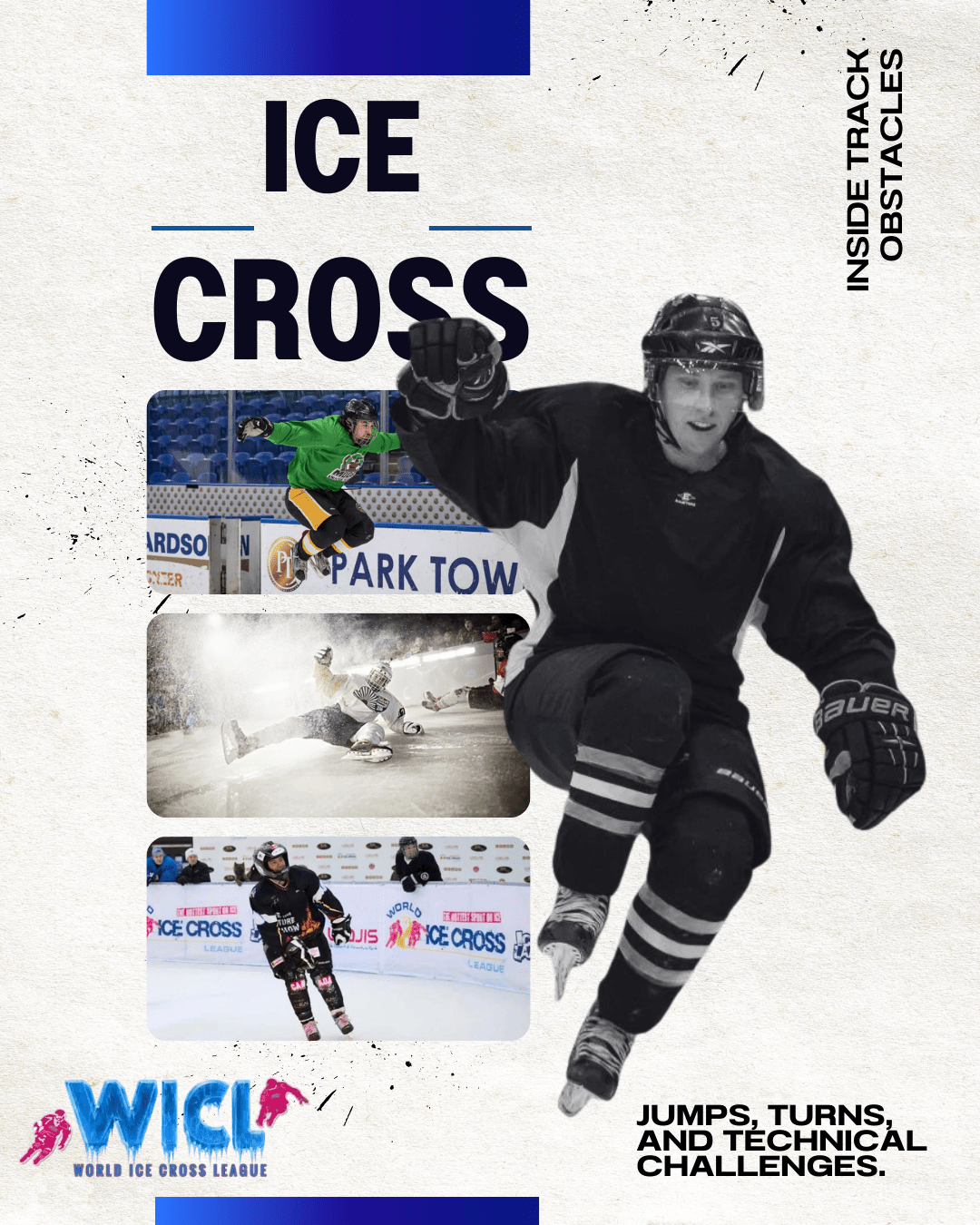
Ice Cross tracks are engineered to challenge athletes physically and technically. Unlike flat ice racing sports, Ice Cross incorporates dynamic features designed to test balance, speed control, and reaction time. Each obstacle serves a purpose in shaping the race.
Jumps
Jumps are among the most visually dramatic elements in Ice Cross. Athletes must approach with proper speed, maintain body control in the air, and land with stability to preserve momentum. Poor landing technique can cost valuable time or position.
Rollers
Rollers are smaller, wave-like bumps placed strategically throughout the track. They test edge control and balance. Skilled athletes use rollers to maintain flow, while less experienced riders may lose rhythm.
Tight Corners
Sharp turns demand precise line selection and strong edge control. Entering too wide or too tight can cause loss of speed and disrupt momentum.
Rhythm Sections
Some tracks include combinations of obstacles designed to create flow patterns. Athletes who maintain rhythm gain a significant advantage.
Technical Challenge
Ice Cross obstacles transform simple downhill skating into a complete technical racing challenge, requiring skill, focus, and experience to navigate successfully.