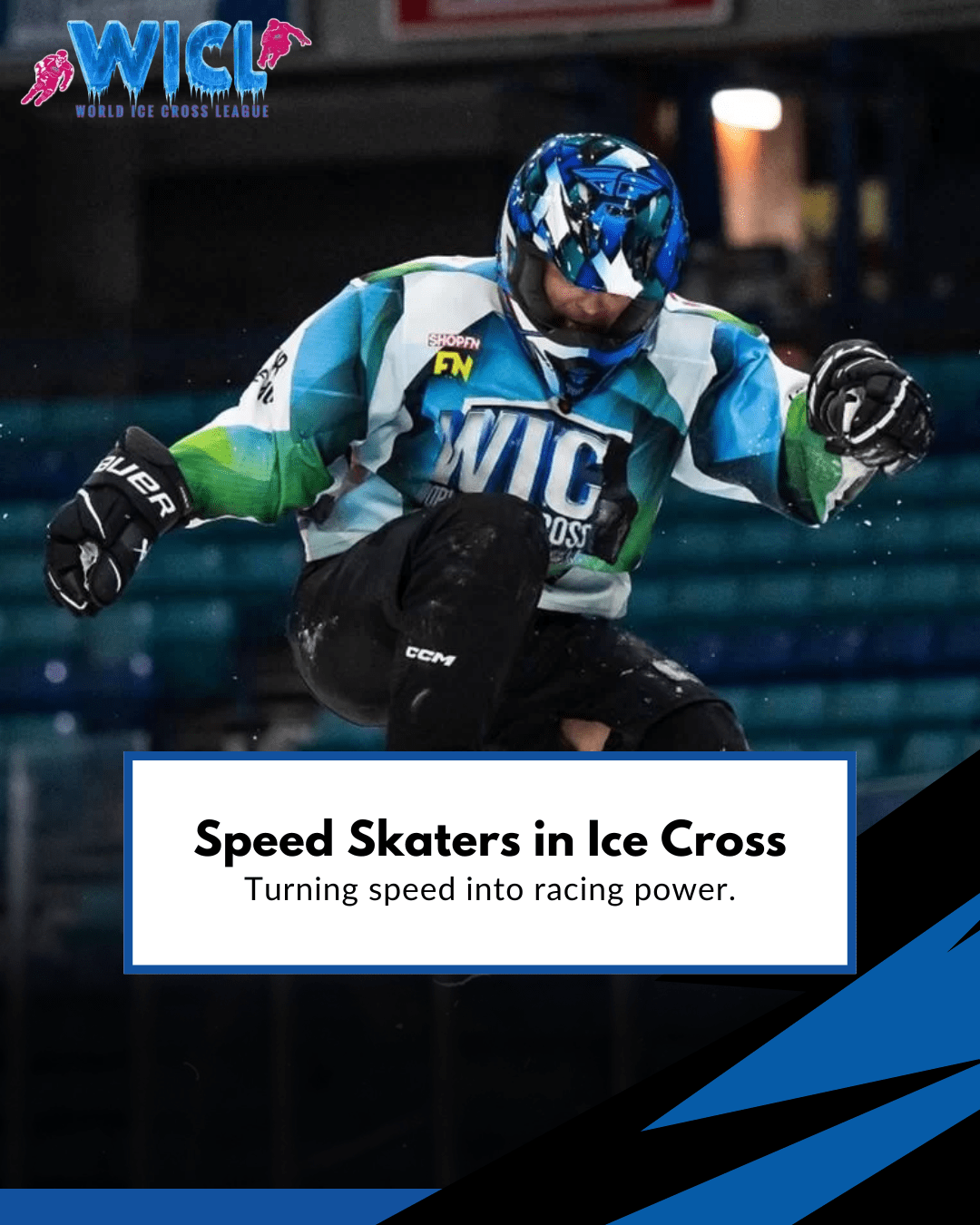
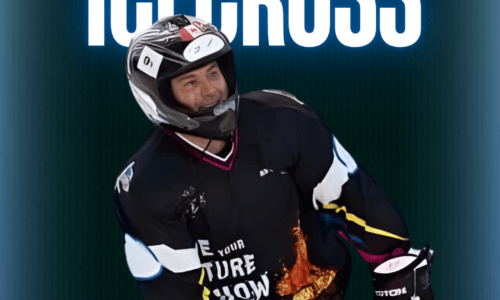
Speed skaters possess many of the physical tools required to succeed in Ice Cross. With powerful stride mechanics, strong aerobic conditioning, and exceptional lower-body strength, speed skating athletes already have a solid athletic foundation. However, transitioning from traditional oval racing to downhill Ice Cross requires technical adaptation, tactical awareness, and mental adjustment.
Ice Cross differs significantly from long-track and short-track speed skating. Instead of racing in controlled lanes on flat ice, Ice Cross athletes compete on steep downhill tracks filled with obstacles, rollers, jumps, and tight corners — while racing directly against three other competitors.
Key Advantages Speed Skaters Bring to Ice Cross
Speed skaters naturally excel in:
-
Explosive acceleration
-
Powerful crossovers
-
Efficient stride mechanics
-
Aerodynamic body positioning
-
Strong endurance capacity
These strengths translate well into Ice Cross, especially in straight sections and sustained speed zones. Speed skaters are often able to generate higher top speeds than athletes from other skating backgrounds.
Skills That Must Be Developed
While speed skaters have strong skating fundamentals, Ice Cross requires additional technical abilities:
-
Jump technique – Managing takeoffs and landings over ice features.
-
Obstacle navigation – Maintaining control over rollers and uneven surfaces.
-
Defensive positioning – Protecting racing lines during head-to-head competition.
-
Physical contact tolerance – Handling close racing situations.
Ice Cross is unpredictable. Athletes must react instantly to competitors and changing ice conditions.
Tactical Adjustments
In speed skating, races are often structured and predictable. In Ice Cross, positioning and race awareness are critical. A strong start can determine the entire heat. Choosing the optimal racing line into the first corner often separates winners from those chasing behind.
Speed skaters must learn to think strategically while maintaining aggression.
Mental Shift
Transitioning to Ice Cross also requires embracing risk. The downhill format increases speed, and direct competition raises intensity. Confidence and composure become essential.
With proper training and adaptation, speed skaters can become dominant Ice Cross athletes, blending elite speed with downhill racing instincts.
Ice Cross offers speed skaters a new competitive challenge — one that pushes their limits and expands their athletic potential.